BF Original
The Debt
Your father's last words were the address of a restaurant on Mott Street. Tell them whose girl you are, he said. They owe me. So when the debts come due faster than the ground he is buried in can settle, you go, coat buttoned to the throat, and you say the name, and a man comes out of the back the way weather comes into a room. Dario Castellano is younger than you expected and colder than anyone you have ever stood in front of, and the debt between your families is not money - it is blood, the night your father could not save his brother. He moves the debt off your back the way your father carried it off yours. He will not reach for you, because wanting it is exactly why a man like him must not. A dark, intense mafia romance about protection that is a leash, and the man holding it who would burn every ledger to keep you safe.
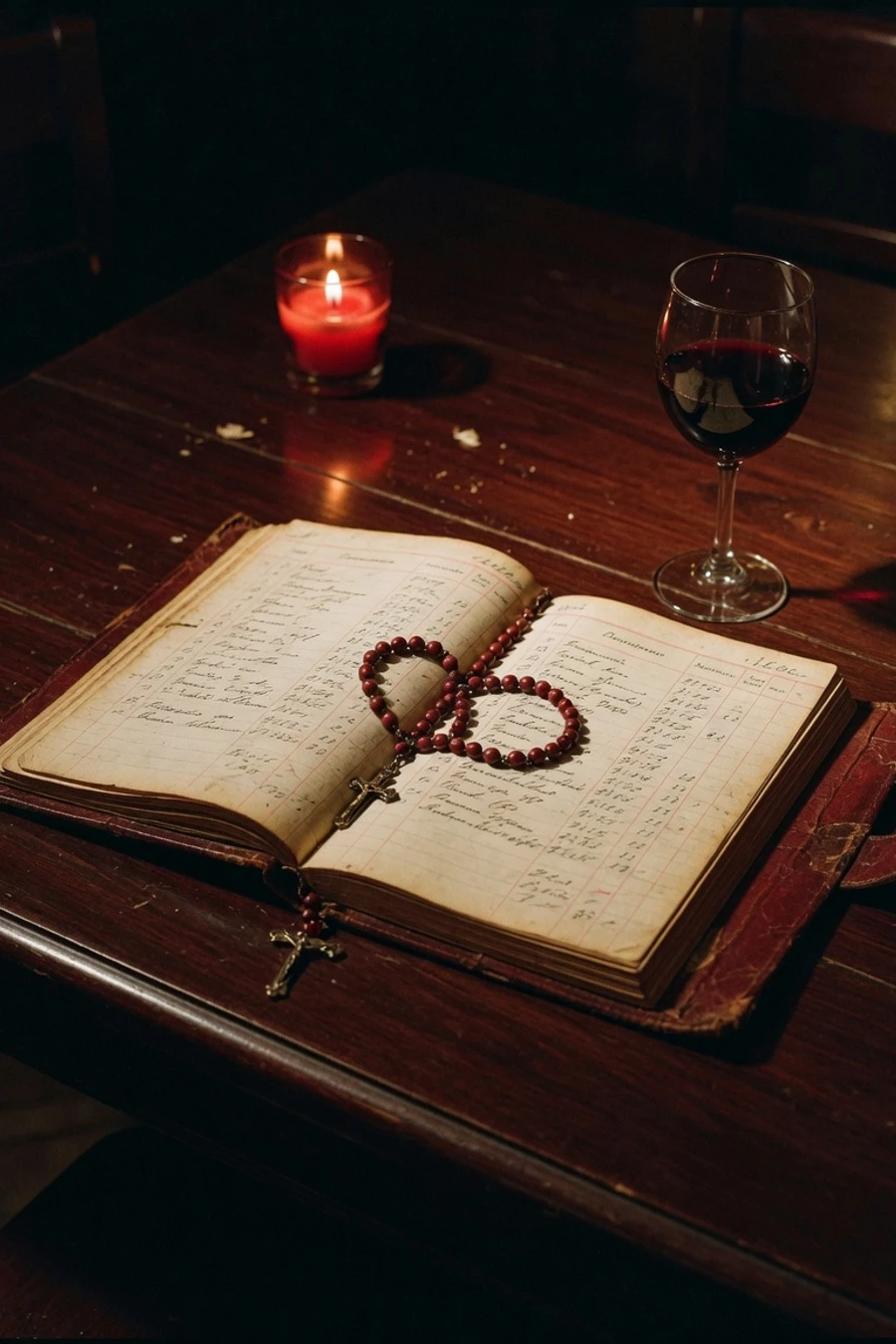
Chapter 1: The Restaurant on Mott Street
You go to Castellano's because your father left it as the last thing he said.
He said it the way a man says a thing he is ashamed of - not looking at you, looking at the window, the morphine making the words come slow. If it goes wrong, go to the restaurant on Mott Street. Tell them whose girl you are. They will know. They owe me. And then he was gone, and the debts he meant by if it goes wrong came due faster than the ground he was buried in could settle, and now there is a man named Vito who comes to your apartment on the first of the month and stands too close in the doorway and explains, patiently, what your father owed and what that makes yours.
So you go to the restaurant. It is a narrow room with pressed-tin ceilings and twelve tables and the smell of garlic gone gold in oil and a grandmother's hand in everything, and it is half-empty at four in the afternoon in the dead hour between lunch and dinner, and a waiter tells you the kitchen is closed and you say you are not here to eat. You say whose girl you are. You watch the word land in his face and change it.
He goes through a door in the back. You wait by the bar with your coat still buttoned. And then a man comes out of the back the way weather comes into a room, without hurry and without sound, and everything in the restaurant arranges itself around him without being asked - the waiter steps back, the cook in the kitchen doorway looks down, the old woman at the corner table stops her rosary. He is younger than you expected and colder than anyone you have ever stood in front of, a dark suit and a darker stillness, black hair and a face that gives you nothing, nothing at all, and he looks at you the way you would read a debt off a page.
"You are Tommy's daughter," he says. Not a question. His voice is low and even and carries the old country in it somewhere under the Brooklyn, in the weight he puts on the vowels, in the way he does not waste a single word.
"He told me to come here. He said you owed him."
Something moves behind the cold of his face and is gone before you can name it. "We did," Dario Castellano says. "We do." He nods to the chair across from him as he sits, and the whole restaurant exhales, and you understand without being told that you have just walked into the only place in the city where the man Vito works for cannot reach you, and that the price of that roof is the man now sitting across from you, watching you with eyes that miss nothing and offer less.
"Sit," he says. "Eat something. You have not eaten today; I can see it." And the kitchen that was closed is open again, and a plate you did not order is in front of you before you have got your coat unbuttoned, and you do not yet understand that this is how it begins - not with a threat but with a plate of food, a debt being moved, quietly, from one man's book into another's.
Chapter 2: What the Family Owes
He does not explain the debt all at once. He gives it to you in pieces, across the next weeks, the way you give a thing to someone you have decided not to frighten.
Your father drove for the Castellanos, years ago, before you were old enough to know what drove for meant. One winter night he drove Dario's older brother somewhere and only one of them came home, and the one who came home was your father, and the reason he came home was a thing he did that cost him the rest of his life and bought the Castellano family a son. That is the debt. Not money. Blood. Your father spent himself slow over twenty years paying for the night he could not save Matteo Castellano, and the family let him, because that is the code, because a debt of blood does not clear with the dying of the man who owed it. It moves. It comes down. It is yours now, the way his eyes were yours, the way his bad luck was.
"He never told me," you say. You are in the back office of the restaurant, the one room with a door that closes, and there is a ledger on the desk between you, an actual ledger, leather and ink, and you understand that this family keeps its accounts the old way, by hand, that every thing owed in their whole dark world is written somewhere in a man's own writing.
"He would not have." Dario does not touch the ledger. He watches you not touch it. "He carried it so you would not have to. That was the whole of his life, I think - carrying it off your back." For the first time the cold in his face gives way to something underneath, and the something is not soft, exactly, but it is true, and true is more than you expected from a man like this. "He was a good man in the one way that is hard. He kept his word to people who could have made him stop."
"And now I owe it. The blood debt. To you."
"No." He says it fast, the only fast thing he has said. Then, slower, choosing: "You owe it to the family. I am the family. Those are not the same and I will not let them be the same, not with you." He stands, and crosses to the window, and looks out at Mott Street going blue with dusk the way men in your life seem to do their hardest speaking to windows. "Vito will not come to your door again. That is done. He understands now whose name is over you." A pause, and you watch his back, the line of his shoulders under the dark wool, the stillness of a man holding something at arm's length. "You did not ask for that protection. I know it. A thing you did not ask for, that you cannot refuse, that binds you to the one who gave it - that is the whole shape of this family, and I have put you inside it, and I am not sorry, and I should be."
Chapter 3: The Church of the Most Precious Blood
He takes you to the church on a Tuesday because his grandmother asks for you, and a Castellano does not refuse his grandmother, and you are, somehow, already enough of a thing in his life that the old woman has asked for you by name.
The Most Precious Blood is two streets over, narrow and dim and gold, the kind of church the old neighborhood built when it was all off the boat and frightened and faithful, and Dario crosses himself at the font with a hand that you have started to understand is a hand other men are afraid of, and the gesture is automatic and ancient and means something he would never say out loud. He lights a candle. You do not ask for whom. You know it is Matteo. You are starting to be able to read the silences, which is a dangerous thing to be able to do to a man like this.
His grandmother holds court in the third pew like a queen in exile, all in black, eyes like wet stones, and she takes your hand in both of hers and looks at you for a long time and then says something to Dario in Sicilian, low and fast, and he goes very still, stiller than his usual stillness, and answers her in two words, and the old woman smiles for the first time and pats the pew beside her for you to sit.
"What did she say," you ask him after, on the steps, in the cold.
He looks out at the street. The collecting-of-himself before the truth, you know it now. "She asked if you were the one the family owes." A muscle in his jaw. "I told her no." And then, because he has promised your father's ghost or his own God or only himself that he will not lie to you, he turns and looks at you straight, and the cold is all the way gone now, and what is under it is so undefended that you have to hold still not to step back from the size of it. "I told her you were the one I owe. That is a different ledger. It has one name in it. It has had one name in it since you walked into my restaurant with your coat buttoned to the throat like you were walking into the cold, which you were, and I was the cold, and I have spent every day since trying to be the one warm thing in a life I made dangerous by standing this close to it."
The bells go for the hour. Neither of you moves. He does not reach for you - you understand by now that he will not, that it is the code in him deeper than any other, that a Castellano does not take the thing he wants because wanting it is exactly why he must not - and you stand on the steps of the Most Precious Blood close enough to feel the held warmth come off him through the wool, and you do not step back, and he sees that you do not, and his hand opens slightly at his side as though it has thought about it.
Chapter 4: The Safehouse
It goes wrong, the way these things go wrong, fast and at night.
A debt the family is owed comes due badly, a man who would rather not pay decides the leverage is you - Tommy's girl, the new soft thing under Castellano's hand - and Dario knows it before you do, knows it the way he knows everything, through the ledger of who-owes-whom that runs under the whole city, and he comes for you himself. Not Vito, not a soldier. Himself, at your door at one in the morning, and you have never seen him move fast and now you do and it frightens you and steadies you in the same breath, a still man unstilled, his hand already at the small of your back steering you out, and he has you in a car and out of the borough before you have your shoes on.
The safehouse is an ordinary apartment over an ordinary bakery in a part of the city no one would look, kept stocked and kept secret, the family's bolt-hole for exactly this. He puts you inside it. He checks the windows, the door, the street below, the gun he does not pretend you cannot see. And only when it is all done, when you are safe by the cold arithmetic he lives by, does the other thing arrive in him, the thing that has nothing to do with safety.
"I should not have let it get this close to you," he says. He is across the small room. He keeps the small room between you on purpose; you can see the keeping of it. "I knew what I was doing. I told myself the protection was a gift. It was not a gift. It was a leash, and I am the one holding it, and tonight it nearly got you killed, and I find -" His voice does the thing it does, the breaking-open under the level, "- I find I do not care about the family tonight. For the first time in my life. They have owned me since I was nineteen and they buried my brother, and tonight a man put his hand near you and I would burn all of it, every ledger, every debt, the whole hundred years of it, to keep that from happening again. Do you understand what that is? That is the one thing a man in my position is never allowed to feel."
And you cross the small room he has been keeping between you, the way you have wanted to since the restaurant, since the plate of food you did not order, and you stop in front of him close enough that he has to either step back or not, and he does not step back, the dangerous still man, he holds, his whole body gone rigid with the holding, his hands fisted at his sides with the not-reaching.
"Then stop holding it at arm's length," you tell him. "I am not a debt you owe. I am not Matteo. I am not a thing you have to carry off my own back. Ask me for the thing you want and I will tell you the answer and the answer is yes, it has been yes, I was waiting to see how long a man like you would wait."
"A long time," he says, low, wrecked, the old country thick in it now. "There is no end to how long I would wait for a thing I was not given." And his hand comes up - the first time, in all of this, that he has reached - and it is not steady, the hand of the man the whole city is steady around, and it finds the line of your jaw, and the held warmth of him is at last let out against your skin.
The rest of the story
Finish The Debt.
Sign up free, then $2.99 opens the closing chapters.
No payment to start.
Private and discreet.